Follow the journey through the property
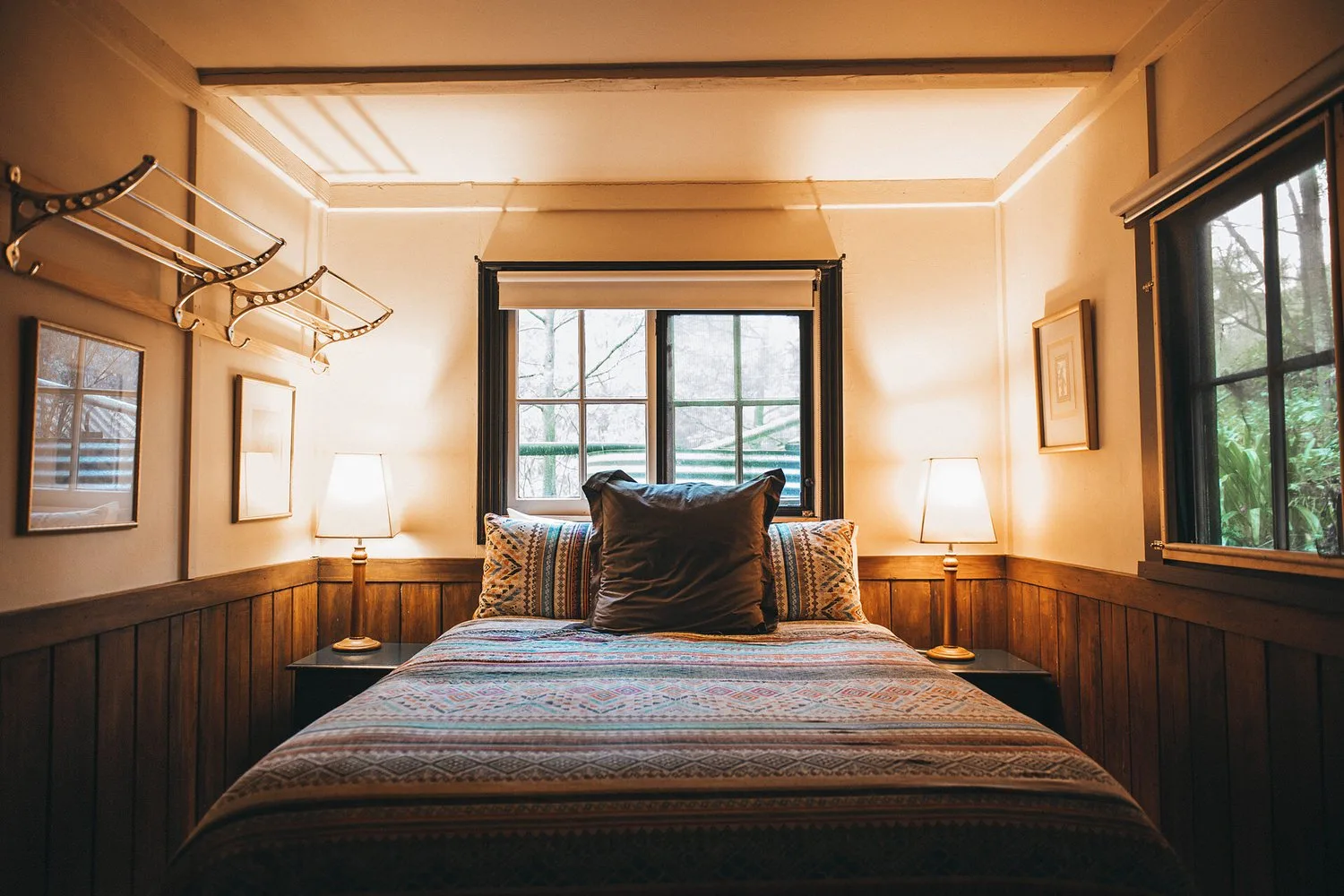
A cottage photograph can show a generous bed and a beautiful window while leaving the route to that room entirely out of frame. Before booking, trace the stay as a sequence: arriving with luggage, reaching the entrance, moving to the bedroom, using the bathroom and returning after dark.
Heritage character does not tell you whether that route will suit you. Neither does a broad label such as “easy access”. Ask for the details that matter to your own circumstances and let the answers guide the decision.
Tourism Australia’s accessible-tourism resources recognise physical, sensory and cognitive access needs, as well as temporary requirements. The useful question is therefore not whether a property is accessible in the abstract, but whether it provides the information and arrangements your group needs.
Start with parking and the front door
Ask where a vehicle can stop, what the surface is like and whether the entrance route includes slopes or steps. If a host describes “a few steps”, ask how many, where they occur and whether there is a handrail. A continuous short video can be useful where separate photographs hide the connections between spaces.
For example: “Could you show the route from the parking area to the entrance, including every step and threshold? We also need to know whether there is a level place to unload luggage.” This is sample wording to adapt, not a request made to a particular host.
If you need dimensions, ask for measurements at the narrowest usable point. A photograph with a door open is helpful context, but perspective can make width difficult to judge.
Check the bedroom and bathroom together
Confirm which floor each room occupies and whether a change in level sits between them. Ask about the space beside the bed, the shower entrance and any fixed fittings relevant to how you move. Explain the information you need without assuming the host knows your equipment or personal preferences.
Separate a movable arrangement from a permanent feature. A chair that can be relocated is different from a narrow doorway; a room described as ground floor may still have a step at its entrance. Get any agreed rearrangements confirmed with the booking.
The photograph accompanying this article shows a cottage bedroom. It does not establish the property's access arrangements. Room photographs should help you understand a space, without being asked to prove features they do not show.
Include the less visible requirements
Depending on your group, useful questions may also concern lighting, noise, scent, written arrival instructions or communication methods. Ask about the specific requirement rather than sending a long generic checklist that obscures the one detail essential to your stay.
Keep the host’s answers with the booking confirmation and check any unresolved point before paying. If the listing and direct reply conflict, ask which description is current.
Our guide to planning a regional weekend starts with the experience you want to have. Access planning belongs at that same early stage. Clear information makes it easier to choose a place with confidence, and leaves less work to do when you arrive tired, carrying bags and ready to settle in.