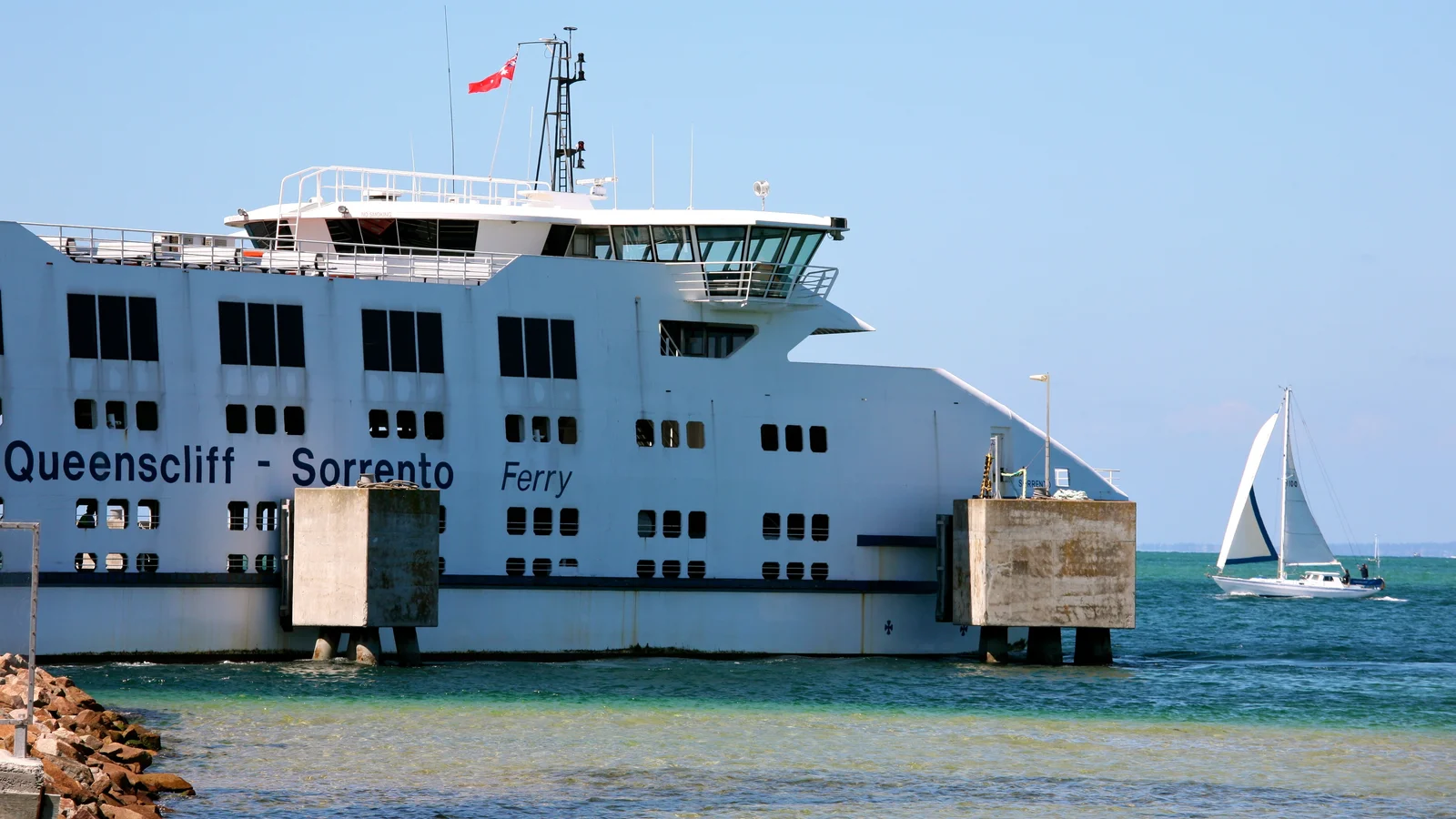
A crossing with two useful ends
The Searoad Ferries crossing between Queenscliff and Sorrento connects the Bellarine and Mornington peninsulas across Port Phillip. The operator describes a journey of about 40 minutes, with indoor lounges and outdoor decks. For a short break, the crossing can become part of the experience rather than an interval to minimise.
The decisive choice comes before departure: are you taking a car, travelling with a bicycle or arriving on foot? Each creates a different relationship between the terminal, your accommodation and the places you can reasonably reach.
The foot-passenger version
A trip on foot rewards a tightly chosen base. Check the actual walking route between the terminal and the property, including gradients and what it will feel like with luggage. ‘Close to the ferry’ is too loose a description to make that decision.
Plan the first meal and one useful outing within a comfortable distance. If another destination needs a taxi or public transport, confirm that connection before relying on it. A car-free break works best when convenience is built into the location.
The bicycle and car versions
With a bicycle, think about the whole trip rather than just permission to board. Ask the accommodation about secure storage and choose riding distances that leave room for a meal and the crossing. Consult the operator’s current ferry FAQs for carriage arrangements.
A car opens up more accommodation choices, but it also adds vehicle check-in and booking considerations. Compare the full vehicle fare and any return arrangement against the route you would otherwise drive. The answer will depend on where the journey actually starts, not simply which peninsula appears nearer on a map.
Build in a margin
Avoid placing a tightly timed meal, room handover or onward connection immediately after the scheduled arrival. A little slack means the crossing can remain enjoyable if boarding takes longer or conditions affect the service.
For access requirements, check the vessel and terminal information with Searoad rather than assuming that every step of the journey is identical. Then choose a base that makes the destination easy to use. A successful ferry weekend is a connected sequence: home, terminal, crossing, room and the places you came to see.



.jpg)